On the eve of Juneteenth 2023, Councilmembers Jamie Gauthier (3rd District) and Kendra Brooks (At-Large) introduced a resolution establishing the Philadelphia Reparations Task Force. It received unanimous approval from City Council on June 22nd, 2023.
The Philadelphia Reparations Task Force studies and develops reparations proposals and programs for Black Philadelphians whose ancestors endured chattel slavery and Jim Crow in the United States. The mission of the Philadelphia Reparations Task Force is to provide the City of Philadelphia, the Commonwealth of Pennsylvania, and the United States of America with a comprehensive overview and report on how reparations can atone for the legacy of slavery, Jim Crow, and institutional racism in America for Black Philadelphians. The vision of the Philadelphia Reparations Task Force is to elevate and protect the full human rights and human potential of Black Philadelphia in real time.
Graduate Research Writers
Philadelphia Reparations Task Force – Final Report
The Philadelphia Reparations Task Force is seeking graduate student researchers and writers to support the development of its Final Report, a comprehensive research and policy document examining historic and present harms experienced by Black Philadelphians who descend from enslaved Africans in the United States.
Graduate writers will assist with literature reviews, research synthesis, narrative drafting, policy analysis, and citation development across multiple sections of the report. Contributors will work closely with the Project Manager and Task Force Leads to expand outlined chapters and translate complex research into accessible, public-facing writing.
Priority Research Areas
- History
- Economic Justice (Wealth and Poverty)
- Health and Wellness
- Law and Policy
- Urban Planning and Sustainable Development
Qualifications
We welcome graduate students in fields including History, Law, Public Policy, Public Health, Urban Planning, Africana/Black Studies, Sociology, Economics, Political Science, and Environmental Studies. Strong research and writing skills are essential; experience with community-engaged research is preferred.
Timeline
Writing support is needed on a rolling basis through December 2026, with the Final Report scheduled for publication in December 2026 or January 2027.
Impact
This work will contribute to a landmark municipal report that will inform public policy, legislation, and reparative justice efforts in Philadelphia.
Compensation
A limited amount of funding is available for positions. Applicants should specify whether they are interested in paid internships or open to both paid and volunteer opportunities
To apply
Send a resume and cover letter to Mariya Khandros at [email protected]
The Philadelphia Reparations Task Force was authorized by City Council but is not an agency of the City of Philadelphia. This is not an opportunity for employment with the City of Philadelphia.
MEET THE PHILADELPHIA REPARATIONS TASK FORCE
Law & Policy
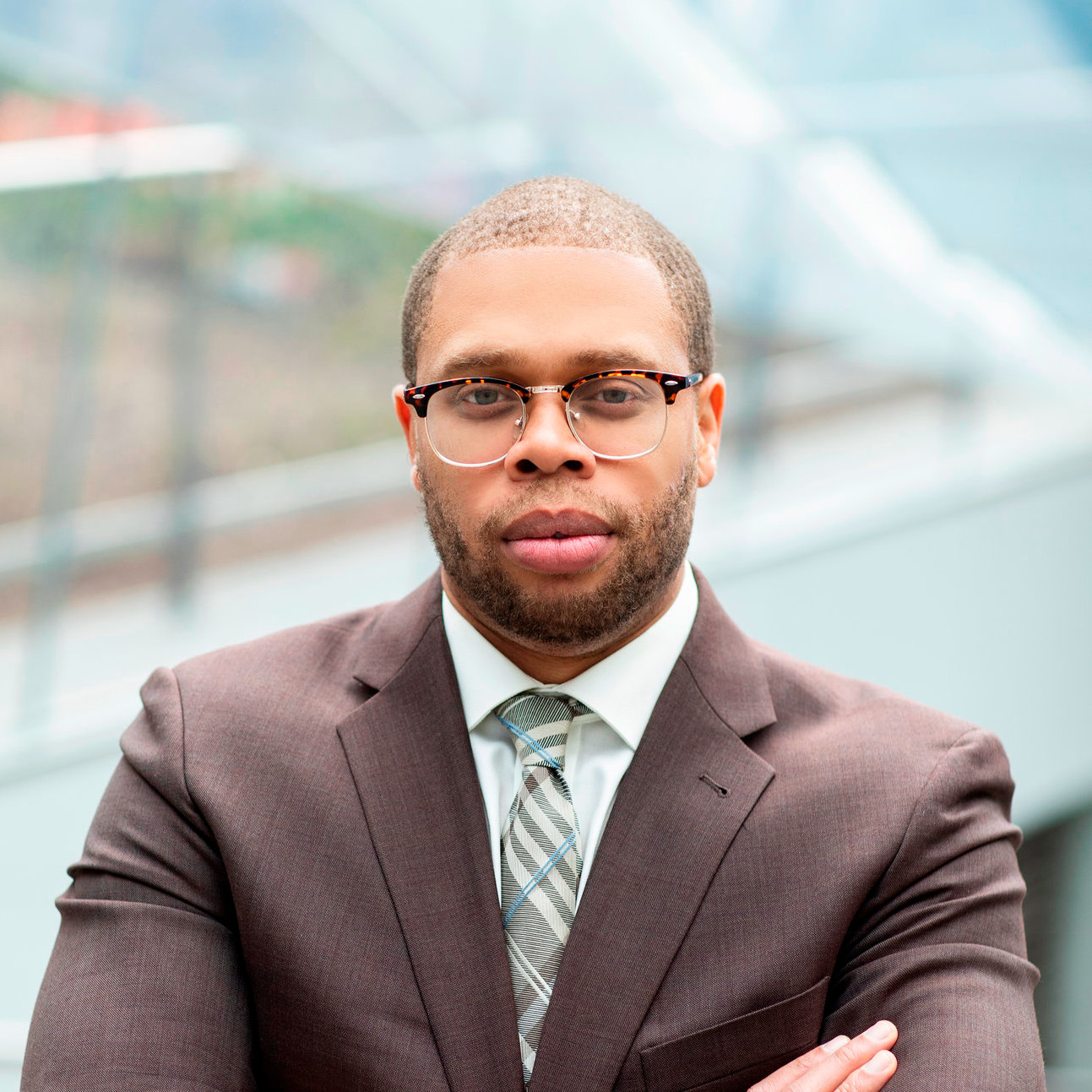
Timothy Welback Esq.
Timothy Welbeck presently serves as the founding Director of the Center for Anti-Racism at Temple University. A Civil Rights Attorney by training and practice, Timothy is a scholar of law, race, and cultural studies. Timothy’s scholarly work focuses on contemporary issues of racial identity in America, the intersection of racial classifications and the law in the American context, contemporary African American culture, and hip-hop as a microcosm of the Black experience. As an attorney, Timothy has long been an advocate for justice, using his legal expertise to defend society’s most vulnerable individuals, including survivors of human trafficking, survivors of police brutality, and the indigent. He has also provided crisis management, guidance, and legal counsel to churches and nonprofit organizations across the globe. In that capacity, Timothy is the Chair of the Board of Directors for The Witness Foundation, and an Advisory Board member of For the Future Organization. Timothy has also served as the Civil Rights Attorney for the Philadelphia Chapter of Council on American-Islamic Relations (CAIR), where he defended the constitutionally protected civil rights and liberties of those who experience discrimination and harassment based on their faith, race, ethnicity, and/or national origin, particularly members of the Muslim community within Pennsylvania.
Urban Planning & Environmental Sustainability
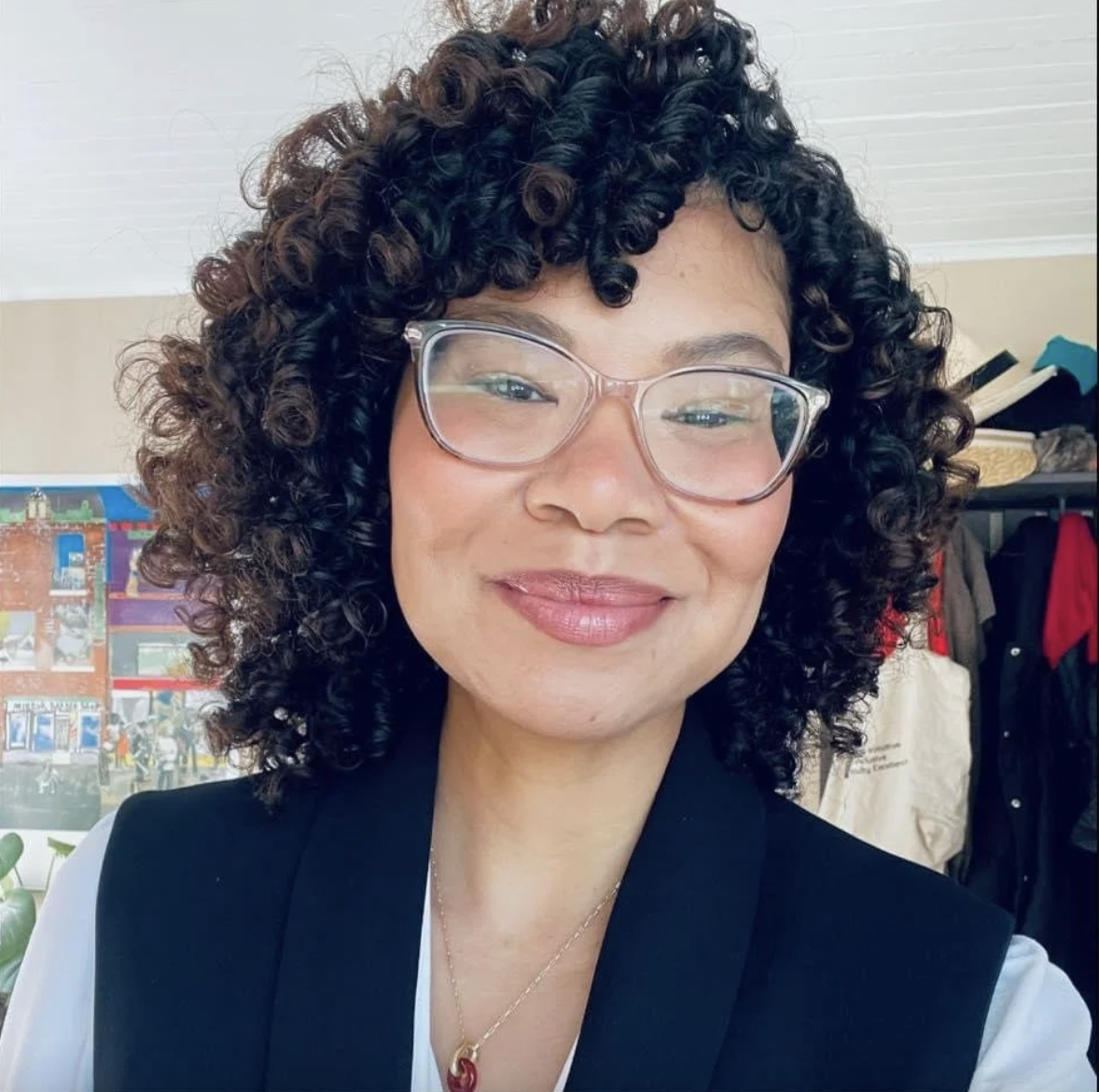
Dr. Mia White
Mia Charlene White (she/her), PhD, is a first generation Assistant Professor of Urban & Environmental Studies at The New School where she uses theories of race, space, and justice to support the study of urbanism, environment, philosophy, historical materialism, and critical praxis. Hailing from Queens, NY, Mia is a mom of two and identifies as a Black woman of African American and Korean descent. Mia is also appointed to the NJ Reparations Council’s Environmental Justice Committee. Her in-progress manuscript on community land trusts and reparations contributes to the literature on “reparative planning” as a theory of spatial belonging that builds a language for future-building at the intersection of racial, climate, and housing justice. Mia did her PhD in Urban Planning at MIT, her Master of International Affairs at Columbia University, and her Bachelor’s degree in Anthropology at SUNY Stony Brook. Mia’s teaching has been recognized with a university-wide award for student-centered universal course design. She is a Mellon Faculty Mentor, a Faculty Fellow with the Institute on Race, Power, and Political Economy, and serves as Associate Director of both the Tishman Environment and Design Center and the Housing Justice Lab at Parsons.
History
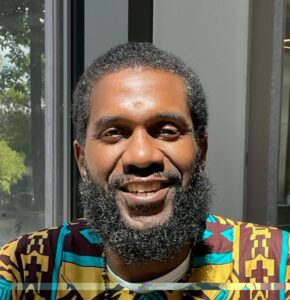
Dr. Ikemba Bomani-Ojore
Dr. Ikemba Ojore currently serves as Assistant Professor and History Committee Coordinator in the Department of Social and Behavioral Sciences at Medgar Evers College. He holds an Associate of Arts in Liberal Arts and a Bachelor of Arts in Liberal Studies from Medgar Evers College, as well as a Master of Arts in Political Science from Brooklyn College. Dr. Ojore earned his doctorate in history from St. John’s University. Dr. Ojore’s research centers on the transnational relationship between Americans and Sierra Leoneans, with particular emphasis on the impact of American educational models on the African continent. His dissertation, “American Mission Schools and the Albert Academy School for Boys: Roots and Legacy of Colonial Education,” was published in 2021. His academic interests include colonial and postcolonial education, neocolonialism, Africana Studies, and pan-Africanism. He is presently engaged in research examining the history and impact of colonizing and decolonizing languages. In addition to his scholarly work, Dr. Ojore is the chief administrator of We Charge Colonialism Media and serves as a co-host at Black Power Media. He is also actively involved with organizations such as the Claim Malcolm X Day Committee, Philadelphia Peace Park, and the Medgar Evers Community Coalition.
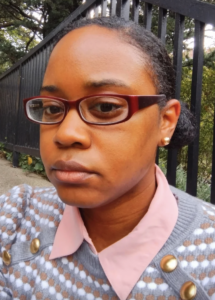
Dr. Menika Dirkson
Dr. Menika Dirkson is a Philadelphia native and Assistant Professor of African American History at Morgan State University. She received her Ph.D. in History from Temple University. Her research focuses on race, crime, and policing in post-1968 Philadelphia. She is the author of the 2024 book, Hope and Struggle in the Policed City: Black Criminalization and Resistance in Philadelphia. Her goals are to educate future generations and create new historical scholarship that is accessible and impactful to scholars and average citizens alike.
Health & Wellness
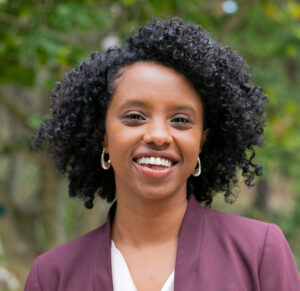
Dr. Naomi Zewde
Dr. Naomi Zewde is an Assistant Professor of Health Policy at UCLA’s Fielding School of Public Health. Her research examines how public institutions can deliver health, medical care, and economic security in a way that minimizes inequalities. Her work is funded by institutions including the Robert Wood Johnson Foundation and has been published and covered in academic and mainstream press including the Journal of Risk and Insurance, Health Affairs, PBS Newshour, and the New York Times. Zewde has a PhD in Health Policy and Administration with a concentration in economics from Penn State.
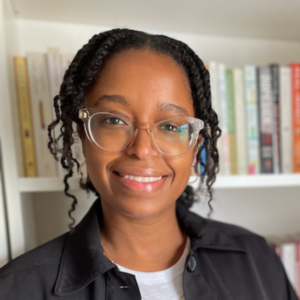
Dr. Shannon Whittaker
Dr. Shannon Whittaker is a postdoctoral fellow within Boston University’s Center for Innovation in Social Science. She received her Ph.D. from Yale School of Public Health and her Master’s Degree in Public Health from Brown University School of Public Health. Her research interests lie at the intersection of place, race, health and history where she examines how social, structural, and political processes such as gentrification impact the health of marginalized communities of color, particularly Black communities. Most of her current work evaluates how systemic forms of racism, discrimination, and dispossession have evolved and how these systems of oppression affect neighborhoods and their residents.
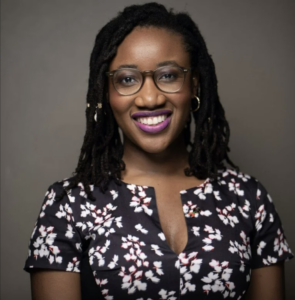
Dr. Marie-Fatima Hyacinthe
Dr. Marie-Fatima Hyacinthe received her PhD in Social and Behavioral Sciences from the Yale School of Public Health. She also holds a certificate from Yale’s Program in Women’s, Gender, and Sexuality Studies. Marie-Fatima’s doctoral research focused on the intersections of carceral systems and public health. Her published work spans reproductive justice, the public health impact of policing, and public health work in Black queer and trans communities. She is also co-leading a participatory action research project with people engaged in the sex trades, in addition to collaborating on a project dedicated to understanding the potential health impact of racial reparations. Marie-Fatima enjoys teaching and mentoring, with experience teaching courses related to health advocacy, social justice, and reproductive justice. Prior to graduate school, Marie-Fatima worked in HIV advocacy and education, as well as immigrant rights. She was raised in Brooklyn, New York, where she still lives, and received her undergraduate degree from Harvard University.
Economic Empowerment
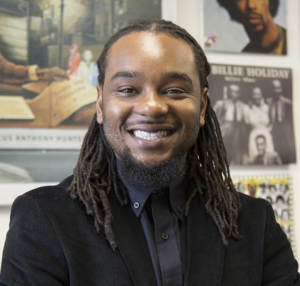
Dr. Marcus Hunter
Dr. Hunter is a transformation architect, highly regarded Author, Academic, policy expert, professor & humanitarian. With experience as a keynote lecturer, consultant, scholar, researcher & author, Dr. Hunter has developed a global reputation as a fresh and inspiring voice in his many areas of expertise. As the visionary coiner of the transformative hashtag #BlackLivesMatter, Dr. Hunter’s influence transcends academia, igniting global conversations on racial equity. With scholarship endorsed by prestigious bodies such as the National Science Foundation and the Social Science Research Council, Dr. Hunter’s research illuminates systemic inequities and forges pathways toward equity for all. His expertise was instrumental in the conception of Congresswoman Barbara Lee’s groundbreaking Bill, marking a historic stride in America’s journey towards a Truth, Racial Healing, & Transformation Commission. Dr. Hunter’s insights resonate on C-SPAN’s BookTV, MSNBC, NPR, and BBC. At the same time, his commentary punctuates the pages of the Sacramento Bee, the Los Angeles Times, USA Today, the Washington Post, and the New York Times.
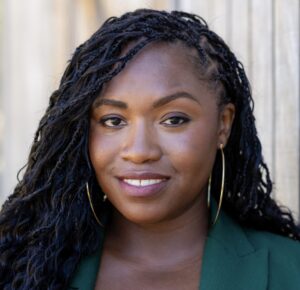
Dr. Tiffany Younger
Dr. Tiffany N. Younger is a medical scientist, trained clinical epidemiologist and Postdoctoral Fellow at the Yale School of Medicine in the Department of Psychiatry. Her research explores intersections of race, gender, the economy, and health, utilizing both quantitative and qualitative methods within a critical community participatory action research framework. Known for her expertise in trauma-informed research, Dr. Younger emphasizes the importance of lived experience in research and prioritizes healing as a key outcome in collaborations with participants and co-researchers. She has conducted extensive research across the United States and internationally in South Africa, Brazil, and Ghana. Dr. Younger earned her Doctor of Philosophy in Social Welfare from the Graduate Center at CUNY and completed her Clinical Epidemiology degree at Weill Cornell Graduate School of Medical Sciences. She also holds a Master of Science in Social Policy from the University of Pennsylvania’s School of Social Policy and Practice. Dr. Younger resides in Harlem, New York.
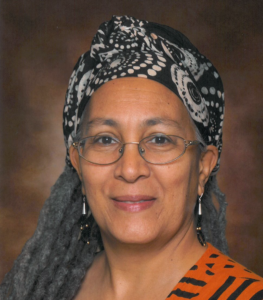
Dr. Jessica Gordon-Nembhard
Author of Collective Courage: A History of African American Cooperative Economic Thought and Practice (2014), and 2016 inductee into the U.S. Cooperative Hall of Fame, Jessica Gordon-Nembhard, Ph.D., is Professor of Community Justice and Social Economic Development, in the Department of Africana Studies, John Jay College, City University of NY. Dr. Gordon-Nembhard is an internationally recognized and widely published political economist specializing in cooperative economics, community economic development, racial wealth inequality, solidarity economics, Black Political Economy, popular economic literacy, and community-based approaches to justice. Recipient of numerous awards in social economics and cooperative studies, she is a member of the Cooperative Economics Council of NCBA/CLUSA; the International Co-operative Alliance Committee on Co-operative Research; a Faculty Fellow and Mentor with the Institute for the Study of Employee Ownership and Profit Sharing at Rutgers University School of Management and Labor Relations; an affiliate scholar with the Centre for the Study of Co-operatives (University of Saskatchewan, Canada); adjunct with the International Centre for Co-operative Management, Sobey School of Business, St. Mary’s University (Halifax, NS, Canada); board member of several community-based and/or cooperative development organizations, and advisor to the Collective Courage Fund. Gordon-Nembhard is also a past board member of the Association of Cooperative Educators; a past fellow with the Center on Race and Wealth at Howard University; and a member and past president of the National Economic Association.
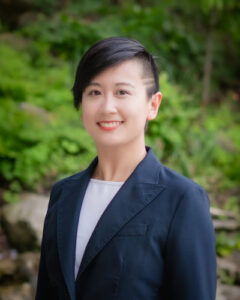 Sicong (Summer) Sun
Sicong “Summer” Sun is an Assistant Professor of Social Welfare at UCLA Luskin School of Public Affairs. They hold a Ph.D. in Social Work and a Master of Social Work from Washington University in St. Louis. Before joining UCLA, Dr. Sun was a faculty member at the University of Kansas School of Social Welfare. Dr. Sun is broadly interested in race, ethnicity, and immigration, poverty and inequality, social determinants of health, and health equity. As an applied interdisciplinary researcher, their scholarship centers on conceptual and empirical understanding of the intersections of race, poverty, and health.
Criminal Justice
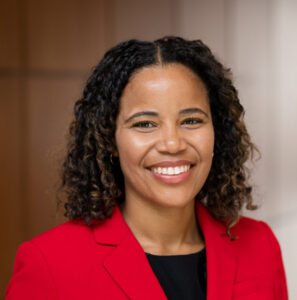
Dr. Cara McClellan
Dr. Cara McClellan is the Founding Director and Practice Associate Professor of the Advocacy for Racial and Civil (ARC) Justice Clinic at Penn Carey Law School, which provides students with hands-on experience working in civil rights litigation and policy advocacy around systemic racism. McClellan joins the Law School from her position as Assistant Counsel at the NAACP Legal Defense & Educational Fund, Inc., where her work focused on increasing education equity and ending the criminalization of Black people. She served as lead counsel on several cases, including Smith v. City of Philadelphia, challenging the Philadelphia Police Department’s use of military-style weapons against protesters, residents, and bystanders in West Philadelphia. McClellan has also represented students and families in school desegregation cases and students and alumni as amici in SFFA v. Harvard, defending Harvard’s affirmative action admissions policy. She is the author of numerous law review articles and is a frequent media commentator on issues of civil rights. A Philadelphia native, McClellan graduated from Central High School and spent two years teaching middle school in Philadelphia with Teach for America. McClellan earned her undergraduate degree from Yale, an MSEd from Penn’s Graduate School of Education, and a JD from Yale Law School. Following law school, she served as a federal judicial law clerk.
Education
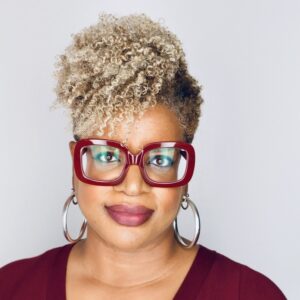
Dr. Camika Royal
Dr. Camika Royal is an incisive scholar-warrior, a critical race theorist, an urban education expert with more than 20 years of experience, and a fierce defender of our collective humanity. She uses her teaching, speaking, and writing to oppose anglonormativity, antiblack racism, cultural oppression, patriarchy, and transphobia. Her work focuses on the intersections of race, politics, history, and urban school reform. After teaching, coaching teachers, and helping to lead a charter high school in the public schools of Baltimore City and Washington, D.C., Dr. Royal returned to her hometown—Philadelphia—and transitioned to higher education. Dr. Royal taught pre-service teachers at Lincoln University of Pennsylvania other colleges and universities in the Philadelphia and Baltimore regions, while she continued to coach and support urban school leaders and teacher educators. She returned to Maryland in 2014 when she joined the faculty of Loyola University Maryland. There, she co-directed the Center for Innovation in Urban Education and led the urban education minor. Dr. Royal’s debut book, Not Paved For Us: Black Educators and Public School Reform in Philadelphia, was released in 2022 from Harvard Education Press and recently earned the 2024 Outstanding Book Award from the American Educational Research Association. She is a highly requested speaker, consultant, and professional developer on issues of school context-based racism and other forms of oppression through ideologies, policies, and practices. In 2024, Dr. Royal joined the faculty of Morgan State University, where she is currently directs doctoral studies in Urban Educational Leadership and is an Associate Professor.
