Philadelphia City Council approved a final $7.1 billion Operating Budget and a $6.98 billion Capital Budget for Fiscal Year 2027 (FY 2027) during the June 11 Council session. Mayor Cherelle L. Parker proposed a $6.97 billion Operating Budget in March.
The plan does not include Mayor Parker’s proposed $1-per-trip rideshare tax, hotel/short-term rental tax, and retail delivery tax. None of the taxes had the necessary nine votes (out of 17 members) for passage, and some of the proposed taxes did not have the necessary support in the Pennsylvania State House, Senate, and the Governor’s Office.
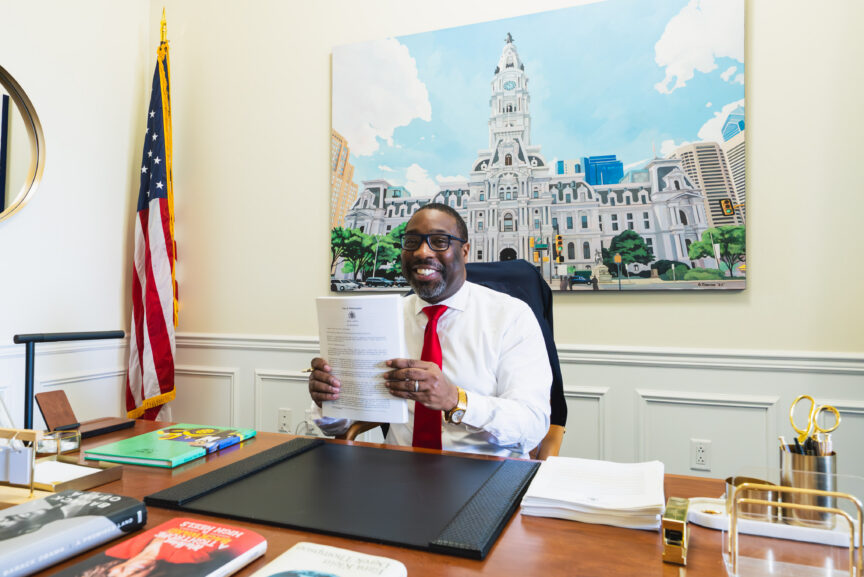
“Our constituents told City Councilmembers they do not want another tax,” Council President Kenyatta Johnson (Second District) said. “We felt, as a body, that we do not want to continue placing a heavy burden on taxpayers while we’re dealing with the issue of affordability here in the city of Philadelphia.”
“I want to thank my fellow Councilmembers and Mayor Parker for their diligence in negotiating and reaching an agreement on the new FY 2027 Operating and Capital Budgets,” Council President Johnson continued. “The approved FY 2027 Operating Budget reflects a shared commitment to investing in our neighborhoods, expanding housing opportunities, strengthening city services, and building a stronger future for residents across the city. This budget positions Philadelphia to continue making meaningful progress while addressing the needs of working families and communities in every corner of our city.”
The FY 2027 Operating and Capital Budgets, the FY2027–2031 Five-Year Plan, and the FY2027–2031 Capital Program reflect the Parker Administration’s top priorities, including public safety, cleaning and greening, housing, economic opportunity, workforce investments, and neighborhood quality of life, as well as Council’s strategic priorities, ensuring that public resources are directed toward initiatives that promote safer communities, economic growth, high-quality municipal services, and affordable housing.
To help address the Philadelphia School District’s (SDP) budget shortfall, Council and the Parker Administration agreed to provide an additional $48 million to the SDP in FY 2027. This is the same amount that would have been raised if the $1-per-ride rideshare tax had been approved.
Additionally, Council agreed to pass one tax change proposed by the Parker Administration—a new use-and-occupancy tax on cell phone towers. That is expected to bring in $2.4 million in additional revenue for the school district each year. Combined, Council’s actions add $50.4 million in new funding for the District in FY2027.
In FY 2027, the SDP will receive about $2 billion from Philadelphia taxpayers—$1.7 billion in taxes paid directly to the SDP, plus an additional $332 million, including $48 million from the city’s budget.
SDP officials also announced this week that they are restoring 340 classroom-based jobs that were slated for cuts. Council President Johnson, Mayor Parker, SDP Superintendent Dr. Tony B. Watlington Sr., and School Board President Reginald Streater came together to say that the Council and the Parker Administration will work together to identify new permanent, recurring revenue sources to support the SDP.
It is important to note that the City of Philadelphia government has significantly increased its direct financial commitment to the SDP over time.
The City’s annual contribution has grown from roughly $104 million in Fiscal Year 2018 to $332 million in Fiscal Year 2027 — nearly tripling in less than a decade. In total, this amounts to more than $2.1 billion in direct support to the School District from Fiscal Year 2018 through Fiscal Year 2027.
Looking ahead, the City continues to deepen its commitment. The FY 2027-2031 Five-Year Plan increases the share of Real Estate Tax revenue allocated to the School District, building on prior millage adjustments. Once fully implemented, these changes will provide an additional $36 million annually to support Philadelphia’s students and schools.
Council approved Resolution #260610 on Thursday, June 4, authorizing Council’s Committee of the Whole to hold hearings to explore new revenue proposals to address the School District of Philadelphia’s historic underfunding. The resolution was sponsored by Council President Johnson, Majority Leader Katherine Gilmore Richardson (At-Large), Majority Whip Isaiah Thomas (At-Large), and Councilmembers Jamie Gauthier (3rd District) and Dr. Anthony Phillips (9th District).
The FY 2027 Operating budget includes no property tax increase, though new assessments from the Office of Property Assessments (OPA) could indirectly raise property taxes. The City’s wage tax remains at 3.74% for residents and 3.43% for non‑residents, with gradual reductions over time.
The FY 2027 budget features several new investments championed by City Council members. Key highlights of the Council’s additions to the budget are as follows:
Education & Youth
- Early Childhood Education
- $6.5 million to expand Pre-K seats, adding 100 seats, bringing total capacity to 5,350 slots
- Higher Education Access
- Additional $1.6 million annually in operating support for Community College of Philadelphia (CCP)
- Youth Workforce Development
- $3 million annually to create 1,000 new Career Connected Learning slots for city youth
Public Safety and Violence Prevention
- Community Violence Prevention
- $25 million in Fiscal Year 2027 grants for community partners and grassroots anti-violence organizations
- Police
- Additional $5 million for body-worn cameras and drones
- Creation of a dedicated Police Quality of Life Team
- Prisons
- $5.6 million in Fiscal Year 2027 to complete rollout of body-worn cameras across prisons
- District Attorney
- $1.3 Million over the five-year plan for priority attorney positions
Transportation & Infrastructure
- SEPTA
- Nearly $900 million over the Five-Year Plan and Capital Program
- Including $25 Million in FY 2027 to sustain Zero Fare transit passes for low-income residents
- Street Safety
- $6 Million in FY2027 for Vision Zero investments
- Roads and Accessibility
- $400 Million for paving and ADA ramps
Housing and H.O.M.E. Initiative
- Mayor Parker’s H.O.M.E. (Housing Opportunities Made Easy) Initiative:
- Debt service included for two $400 million borrowings supporting the $2 Billion initiative
- Housing Supply & Development
- New support for the Philadelphia Land Bank
- $10 million in capital funding for modular housing production
- Housing Quality
- $7.5 Million to establish a Proactive Rental Inspection Program (PRIP)
Economic Opportunity & Workforce Development
- Creation of a new Economic Mobility Cabinet
- $14 Million over five years for financial counseling and empowerment services aligned with the H.O.M.E. Initiative
- $10 Million in Fiscal Year 2027 for workforce development investments
- Continued prioritization of Small and Local Business Enterprises
Public Health and Wellness
- Opioid Response / Wellness Ecosystem
- $211 million in opioid settlement funds over five years
- Continued operations at Riverview Wellness Village, Philly Home at Girard, Kensington Wellness Support Center and Wellness Court
- Sexual Assault Services
- $300,000 annually to fully fund the Philadelphia Sexual Assault Response Center (PSARC)
Libraries, Arts, Culture and Public Facilities
- $33 Million in Capital Program funding for Philadelphia Free Library HVAC (Heating, Ventilation, and Air Conditioning) improvements
- Full capital funding for two new Health Centers
- Continued investments in the Philadelphia Fire Academy, where cadets learn basic firefighting and emergency medical services
- Support for cultural institutions, including increased capital and operating funding for the Dell Music Center
Labor & Workforce
- $615 Million reserved for collective bargaining agreements over the Five-Year Plan
Neighborhood Services and Quality of Life
- Enhanced illegal dumping enforcement
- Continued highway beautification investments
- $130,000 annually for Animal Care and Control contracted wage increases
Government Operations and Administration
- Risk Management
- $150,000 annually to establish a Vacatur Fund unit for compensation claims from wrongfully convicted individuals whose murder convictions were overturned.
- Licenses & Inspections
- $900,000 in Fiscal Year 2027 for vehicles supporting newly hired inspectors and enhanced eCLIPSE (Commercial Licensing, Inspection, and Permit Services Enterprise Project) reporting
- Fleet Management
- $400,000 annually for additional vehicle repair and maintenance overtime
The Operating Budget governs the day-to-day financial operations of the city, which includes an estimate of proposed revenues and expenditures for the fiscal year; the Capital Budget covers proposed expenditures for items such as City buildings, facilities, and specialized equipment. The 2027 Fiscal Year starts on July 1 and ends on June 30, 2027.
The budget package now goes to Mayor Cherelle Parker for her signature.
