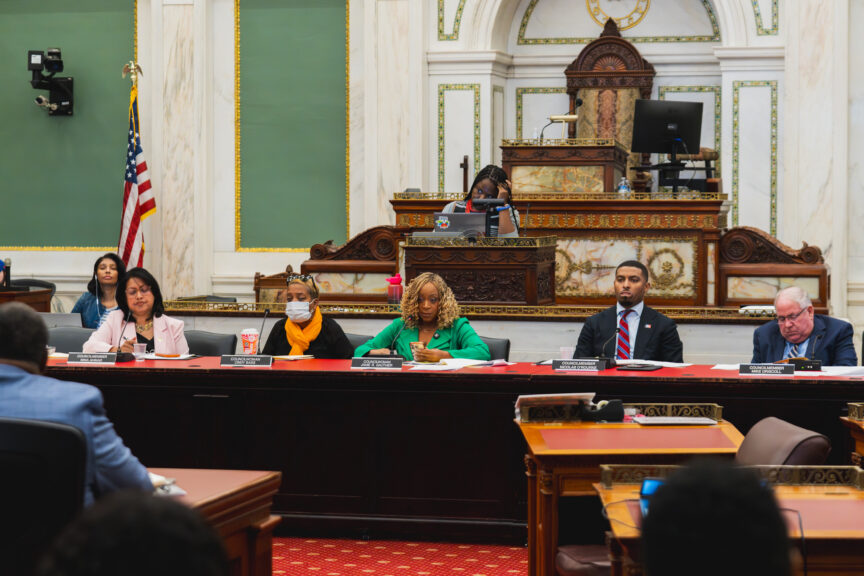
City Council’s Committee on the Environment voted unanimously (6-0) against Mayor Parker’s proposed seven-year contract to keep sending Philadelphia’s trash to Reworld trash incinerators, including the nation’s largest trash incinerator in Chester, PA.
The Committee amended the Administration’s waste disposal contract ordinance to remove Reworld. It also sent the contracts to landfill trash with WM and Republic to the Council floor for consideration. This move ensures waste continues to be collected but prohibits the Administration from contracting with Reworld trash incinerators.
The Parker Administration asked Council to continue sending roughly 30% of the city’s trash to trash incinerators for seven more years. Because the contract runs multiple years, the Home Rule Charter required Council approval.
“We have been clear for over a year that we won’t tolerate the toxic status quo,” said Councilmember Jamie Gauthier, Chair of the Committee on the Environment. “At a time when municipalities across the nation are making greener choices, we won’t allow the City of Philadelphia to keep making our residents sick with air polluted with our own waste.”
“In 2025, I asked Reworld to provide actual evidence of combined environmental exposure and respiratory function to assess the impacts of incineration on the residents of Chester and neighboring communities,” said Public Health and Human Services Committee Chair, Dr. Nina Ahmad. “Unfortunately, such data has still not been produced to date, and I cannot, in good conscience, vote in favor of the new contract without evidence-based data. My “no” vote on Mayor Parker’s plan to renew Philadelphia’s contract with Reworld reflects my deep concern over the public health impacts of incineration on the communities already burdened by other environmental challenges.”
Councilmember Nicolas O’Rourke said, “As a member of both the Committee on the Environment and the Committee on Public Health, the administration never shared information that took priority ahead of the health impacts of trash incineration. I was proud to support the Stop Trashing Our Air Act, and I’m glad to keep legislating with the health of the people and the environment in mind.”
A Life Cycle Assessment commissioned by Delaware County Council is the only study to date focused specifically on Philadelphia-area incinerators, landfills, and waste. It found that burning trash and landfilling the resulting ash is 23 times worse for human health and environmental impacts than landfilling unburned trash.
Chester Health Commissioner Dr. Kristin Motley said, “The incinerator is a major contributor of pollution, even by their own reports. It’s just inherent in the facility’s operations which is why facilities like this should never be built within a neighborhood.”
Former Philadelphia Health Commissioner Dr. Walter Tsou said, “It should be obvious that burning plastics and our waste will lead to air pollution with criteria air pollutants like PM 2.5, VOCs and Nitrogen Oxide products. All are known lung irritants that can trigger asthma, nosebleeds and coughing spells. Children in particular are at risk because they have smaller lungs and breathe twice the air for their body weight. PM 2.5 blocks air exchange at the capillary level leading to heart attacks. What is not measured are dioxins, PFAS, formaldehyde and other chemicals that are known carcinogens. Nor is Philadelphia immune to breathing in these pollutants since our airport is under 9 miles away from the Reworld incinerator.”
The Parker Administration’s analysis comparing landfilling and incineration describes incineration as safe only where “continuous, high performance control systems” are in place, with acceptable outcomes that “depend heavily on uninterrupted optimal operation.” Reworld Delaware Valley doesn’t meet that standard.
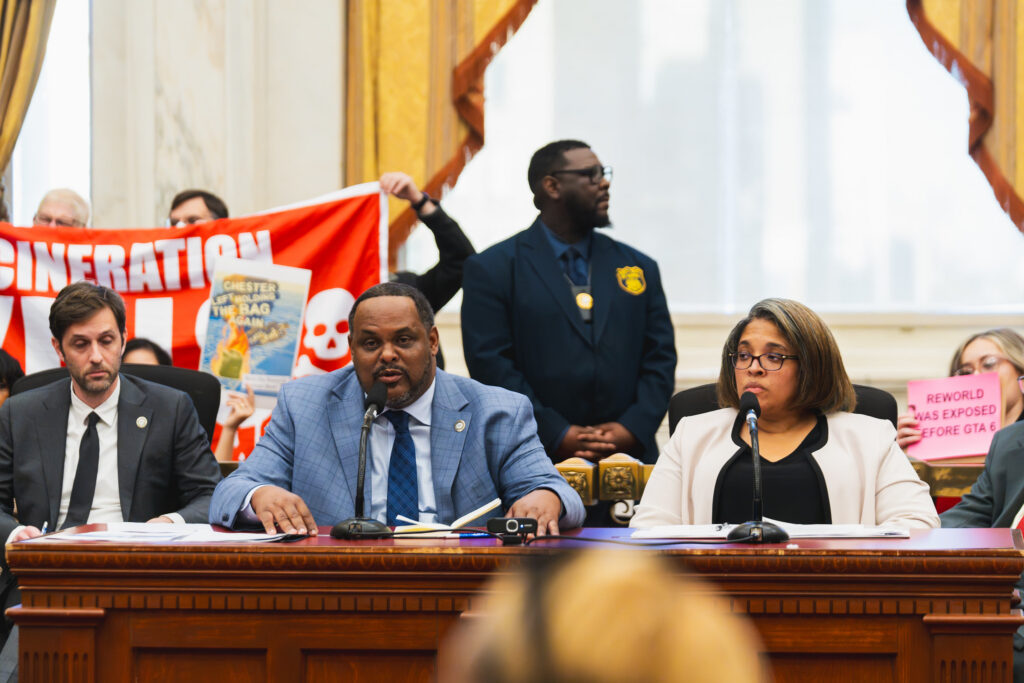
During the hearing, Eric Bazis, who spent nearly 30 years working at Reworld Delaware Valley and was subpoenaed to testify before the committee, said, “Old equipment also impacts safety – I remember opacity monitors and other measuring devices getting old and giving false measurements. We were not told to replace them, just to make sure they showed numbers that looked right. Negligence can also create problems – I remember the DelVal plant regularly running positive – which means the toxic air is pushed out of the boiler into the air – unfiltered. You can [see] it with your own eyes – the black streaks on the openings of the building show that the facility ran positive, although I don’t know how old the current streaks are.”
“The Parker Administration has been doing all they can to perpetuate waste incineration, seeking out evidence to support their confirmation bias, but the only analyses specific to Philly’s waste being burned in Chester show that it’s 23% worse than landfills for the climate and 23 times worse for public health and other environmental impacts,” said Mike Ewall, Executive Director of Energy Justice Network and a key author of the Stop Trashing Our Air Act. “With Philadelphia being #2 in cancer among the largest U.S. cities, and the 4th worst asthma capital, we cannot keep feeding trash to the largest air polluters in our region — the incinerators that surround our city. It’s clear that landfills in our state impact far fewer people and are the lesser evil we must choose as we work to reduce our waste.”
Last year, Delaware County adopted a plan to divert 100% of its trash from incinerators. The American Lung Association also told Council that ending trash incineration is among the best steps Philadelphia can take to reduce respiratory illness.
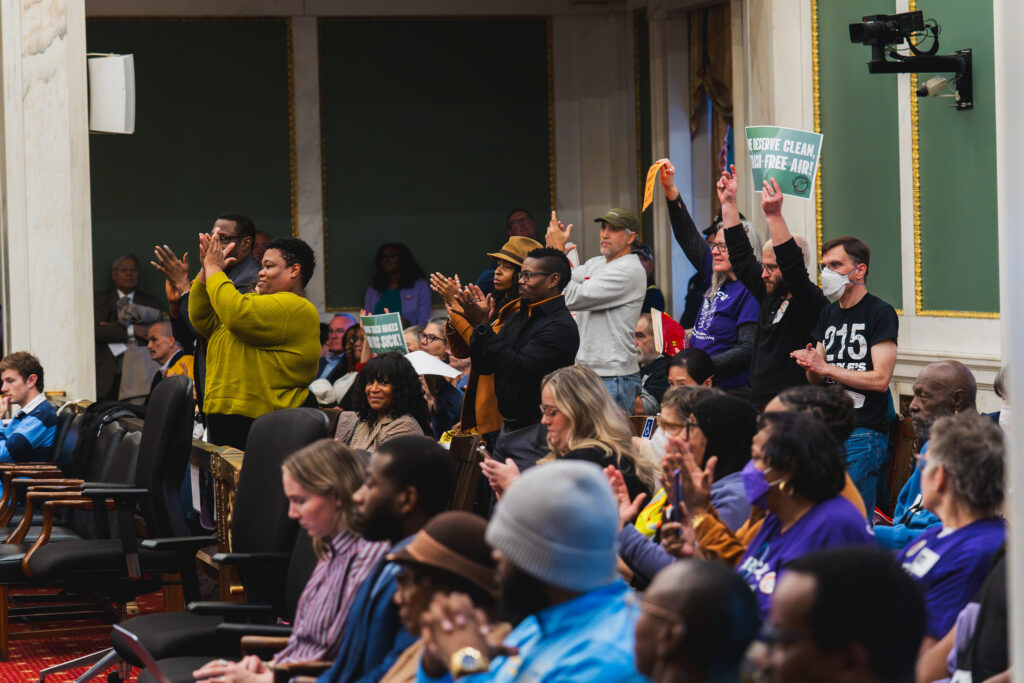
At the hearing, Chester officials informed City Council that the Delaware County Solid Waste Authority voted to divert at least 50% of waste from incinerators starting in 2027. “It’s the beginning of the end for Reworld,” said Chester Health Commissioner Kristin Motley.
Reworld Delaware Valley is one of the largest sources of pollution in Southeastern Pennsylvania. Incinerator emissions are associated with climate change and with cancer, asthma, and other respiratory illnesses, and residents of Philadelphia and Chester bear those impacts. Philadelphia closed the last incinerator within our city limits decades ago, citing harm to surrounding communities.
According to DEP and EPA data analyzed by Councilmember Gauthier’s office, Reworld Delaware Valley has accumulated nearly 400 violations and nearly $1 million in fines over the past two decades. A former employee has sued the company, alleging they were fired for refusing to falsify the plant’s sulfur dioxide filtering settings so the incinerator could pass inspection.
Octavia Geiger, Policy Analyst with New Voices for Reproductive Justice, said “Reproductive Justice means having the power and resources to make decisions about our bodies, our families, and our futures. But those decisions are not truly ours when the air we breathe and the environment where we live threaten our health. The ability to live in a safe and healthy environment is fundamental to our reproductive freedom.”
Alisa Shargorodsky, Executive Director of ECHO Systems, said, “Philadelphia can’t keep burning trash in Chester while communities pay with their health as we try to figure it out. We need to stop burning trash now, and at the same time pass prevention-first waste reform that cuts how much waste we create, and then have to mitigate, we need prevention in the first place to protect vulnerable communities and Philadelphia residents alike.