The Philly Food Affordability Act proposes a new Office of Food and Nutrition Security, explores a City-supported grocery store, and examines grocery pricing practices to make healthy, affordable food more accessible to Philadelphians
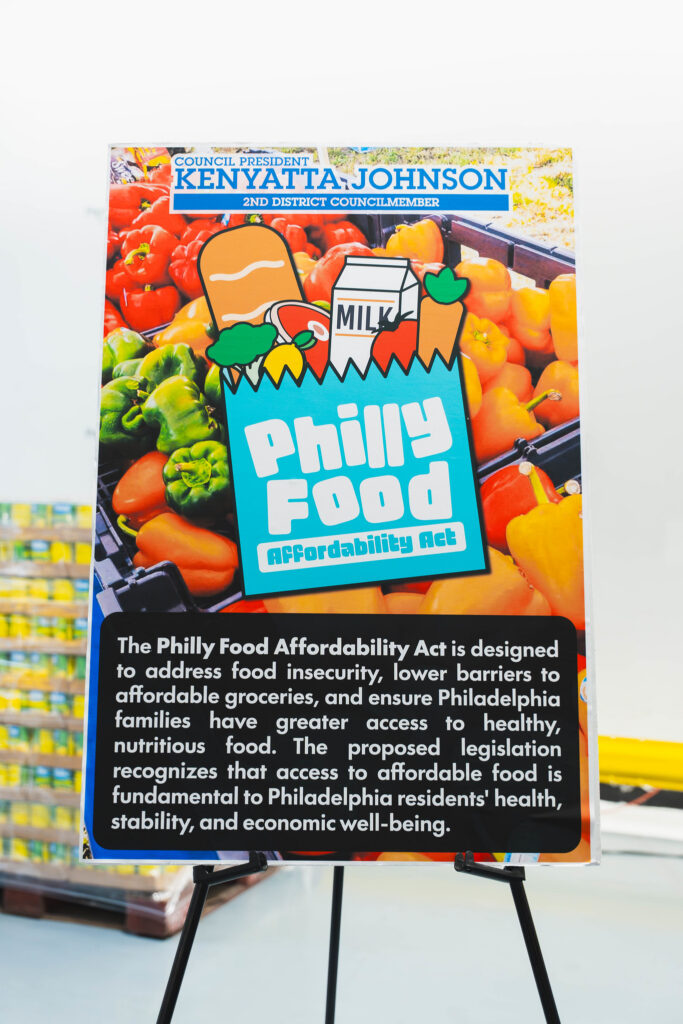
Philadelphia City Council President Kenyatta Johnson (Second District) announced a comprehensive food access and affordability package to address food insecurity, reduce barriers to affordable groceries, and ensure Philadelphia families have greater access to healthy, nutritious food.
The proposed package of legislation, known as the “Philly Food Affordability Act,” recognizes that access to affordable food is fundamental to the health, stability, and economic well-being of Philadelphia residents.
The package takes a citywide approach to strengthening food security by improving coordination across government, increasing community engagement, enhancing transparency, and exploring new ways to make groceries more affordable.
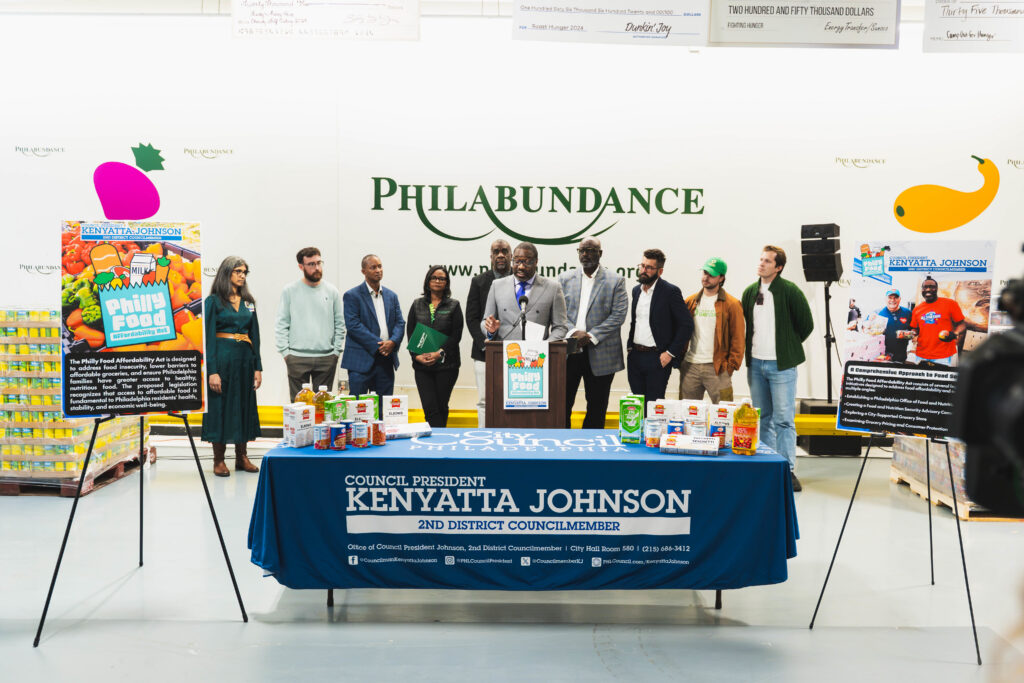
“Families across Philadelphia are feeling the squeeze from the rising cost of living, and putting food on the table should never be an impossible choice,” said Council President Johnson. “The Philly Food Affordability Act ensures our residents have access to healthy, affordable food in every neighborhood. We need a coordinated citywide strategy that unites government, community organizations, and the private sector to address food insecurity, strengthen our local food system, and deliver meaningful solutions for working families, seniors, and our most vulnerable residents.”
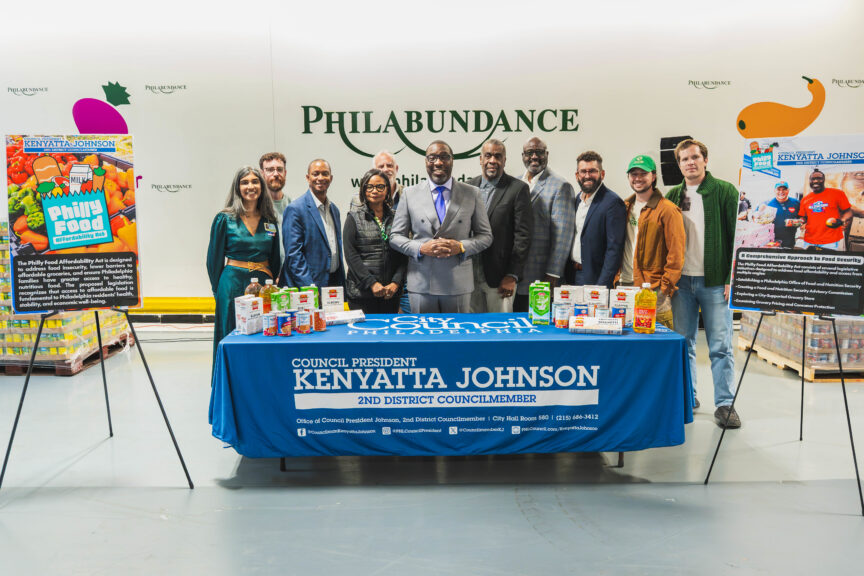
The announcement was made at Philabundance’s warehouse in South Philadelphia, which is located in Johnson’s Second Council District.
Philabundance reduces hunger and food insecurity by providing food access to those in need in partnership with more than 300 community-based organizations across nine counties in Southeastern Pennsylvania and Southern New Jersey.
Members of Philadelphia City Council’s Food and Nutrition Security Task Force attended the announcement and expressed support for the proposed Philly Food Affordability Act. The legislation draws on recommendations from the Task Force, which released a major roadmap in June 2026 to address the city’s severe hunger crisis.
A Comprehensive Approach to Food Security
The Philly Food Affordability Act consists of several legislative initiatives designed to address food affordability and access from multiple angles:
1) Establishing a Philadelphia Office of Food and Nutrition Security
The bill and resolution will propose amending the Philadelphia Home Rule Charter to establish a dedicated Office of Food and Nutrition Security, subject to voter approval on the May 18, 2027, ballot.
The proposed Office would be led by a Director appointed by the Mayor and approved by City Council, with at least five years of relevant senior leadership experience. Its responsibilities would include:
- Developing citywide policies and strategies for food and nutrition security.
- Coordinating food-access initiatives across City departments and with community and private-sector partners.
- Collecting and reporting data on food insecurity across Philadelphia.
- Improving access to healthy, affordable food.
- Preparing for food-system disruptions and pursuing additional funding opportunities.
- Engaging residents and community stakeholders to develop solutions.
- If voters approve it, the Charter amendment would take effect on January 1, 2028.
2) Creating a Food and Nutrition Security Advisory Commission
The legislation would establish a Food and Nutrition Security Advisory Commission to advise the Mayor and the proposed Office of Food and Nutrition Security on strategies to identify and address food insecurity.
The Commission would recommend ways to improve data collection, identify neighborhoods with disproportionately high levels of food insecurity, evaluate existing City programs, and remove barriers to meaningful community participation.
The Commission would submit its recommendations to the Mayor and the Council President by December 31, 2029. Its creation would depend on voter approval of the Charter amendment.
3) Exploring a City of Philadelphia-Supported Grocery Store
Recognizing that some Philadelphia neighborhoods face significant barriers to accessing affordable groceries, the resolution also calls for City Council hearings to assess the feasibility of establishing a City of Philadelphia-supported grocery store.
The hearings would examine potential public-private partnerships, funding models, and lessons from similar initiatives in other cities to determine how Philadelphia could expand access to affordable, nutritious food.
The package also calls for hearings to examine how grocery retailers use consumer data, surveillance technologies, algorithmic pricing, and dynamic pricing.
The hearings would assess how these practices may affect grocery affordability, price transparency, competition, and consumer privacy, and identify potential policy solutions to protect Philadelphia shoppers.
4) Examining Grocery Pricing and Consumer Protection
The package also calls for hearings to examine how grocery retailers use consumer data, surveillance technologies, algorithmic pricing, and dynamic pricing.
The hearings would assess how these practices may affect grocery affordability, price transparency, competition, and consumer privacy, and identify potential policy solutions to protect Philadelphia shoppers.
Putting Philadelphia Families First
Council President Johnson emphasized that the Philly Food Affordability Act is intended to build a coordinated, long-term approach to food affordability that recognizes the connection among household budgets, public health, and neighborhood economic opportunity.
“Lack of food security and access to healthy, nutritious food is a public health issue, an economic issue, and an issue of fairness,” Johnson said. He continued, “We cannot ask families to thrive when they are struggling to afford the necessities of life. Good food should be within reach for every family.”
This package offers Philadelphia the opportunity to take a more coordinated approach and explore new solutions.
The Philly Food Affordability Act builds on the City’s ongoing efforts to address food insecurity and to strengthen partnerships with community organizations, food providers, and other stakeholders working to ensure residents have access to the resources they need.
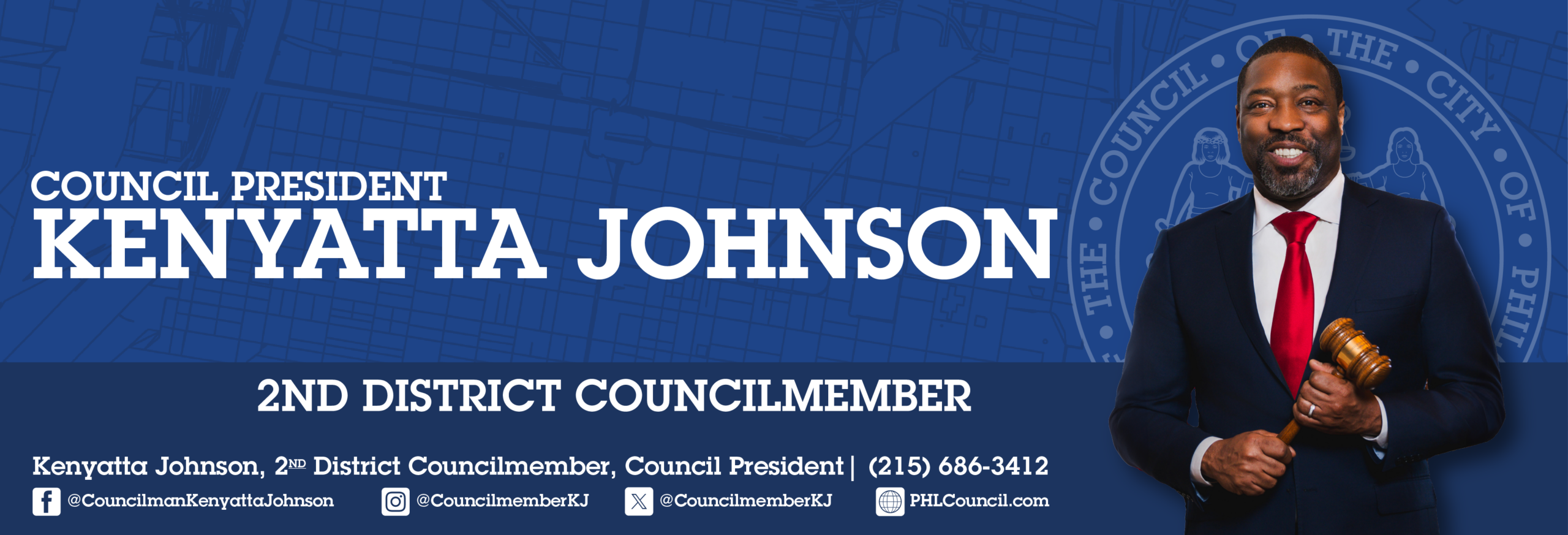
Council President Kenyatta Johnson, a former Pennsylvania State Representative, represents the Second Council District, which includes parts of Center City, South Philadelphia, and Southwest Philadelphia.
Philadelphia City Council is the legislative arm of Philadelphia municipal government. Keep up with Council on phlcouncil.com, and on X, Facebook, Instagram, and YouTube.
